
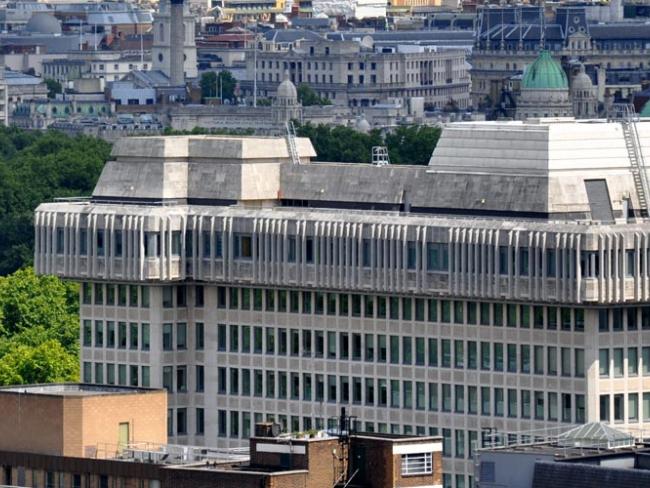
Ministry of Justice building, 102 Petty France, London. Photo Andreas Praefcke via Wikimedia. CC BY-SA 3.0 Attribution-ShareAlike 3.0 ported.
The prospect of the end of jury trials for thousands of accused people is a frightening one. The British people need to judge this important issue – sitting as a jury over the politicians…
Jury trials in England and Wales will be scrapped for crimes that carry a likely sentence of less than three years if the justice secretary, David Lammy, gets his way.
Reassuringly, his proposal is far from popular. Yet sentiment alone is not enough. People throughout the land should voice their concerns and make sure this ploy is thrown out.
Lammy paints his proposal as a “bold, necessary reform” to reduce unprecedented delays in the court system. This will remove the right for defendants to have their case heard by a jury in many instances.
Only the most serious offences such as murder, robbery and rape would have a jury trial. The rest, including fraud and complex financial crime, would be heard by a new form of judge-only Crown Court, or by magistrates for lesser offences.
‘Critics, including almost all barristers, say the proposal won’t help to reduce the backlog…’
Critics, including almost all barristers, say that the government’s proposal won’t help to reduce the backlog of cases. They claim that problem is a result of cuts to the Ministry of Justice budget, as well as other obstacles unrelated to jury trials.
Riel Karmy-Jones KC, Chair of the Criminal Bar Association, which represents specialist criminal barristers in England and Wales, has criticised the changes. He says they bring “a wrecking ball to a system that is fundamentally sound and has been in place for generations…Juries work – they do their job superbly, and without bias. Juries have not caused the backlog”.
On 27 November, the Bar Council and the Criminal Bar Association issued a joint statement making similar points, emphasising that the key proposals – taking away the right to elect for a jury trial and introducing a new intermediate court – have not been piloted nor thoroughly modelled.
No evidence
Their statement continued, “There is no evidence we have seen (notwithstanding our repeated requests for the same) that it will significantly reduce the Crown Court backlog. But there is evidence that diminishing the constitutional principle of trial by jury will erode trust in our criminal justice system. We continue to argue that the government’s focus should be on fixing the swathe of inefficiencies plaguing the system, which could be resolved and make a real difference now.”
Greater attention to efficiency in the Crown Court system would have a profound impact on speeding up cases and hearings. This would include: better use of court rooms which often sit idle; more professional arrangements ensuring that interpreters are always available; emergency investment in better courtroom IT infrastructure which too often breaks down; recruiting more lawyers and caseworkers to the Crown Prosecution Service; better performance by prosecution and police in complying with court directions; ensuring that a CPS lawyer is stationed at court, empowered to make decisions about cases; a concerted programme of refurbishment and maintenance of collapsing court buildings that routinely cause closure and thereby delays; and speeding up police Digital Investigation Unit reports.
In proposing changes, Lammy relied on part 1 of a review of the criminal courts carried out by retired senior judge, Brian Leveson. Part 2, about efficiencies, is due out next year. It seems perverse to decide that jury trials should be restricted before considering how to improve them.
But this is not new. Leveson carried out similar work in 2015, the Review of Efficiency in Criminal Proceedings. It contains many sensible recommendations. Ten years on and most have yet to be implemented. Perhaps that is why those who know how courts work suspect that the government will cherry pick recommendations and ignore those they do not like.
Though jury trials will remain for the most serious offences, scrapping them for crimes with sentences of less than three years is the thin end of the wedge. It would make their total abolition at some future date more likely.
Erosion of trust
If decisions are concentrated in the hands of a single judge or magistrate, trust in justice will be eroded. There is evidence that ethnic minorities, for example, believe that they get a fairer hearing with juries than with magistrates alone.
Ripping up settled practice, overturning centuries of jury trials, and removing an essential democratic safeguard is a huge attack on a fundamental right of the people. And there wasn’t even a mention of it in the Labour Party’s election manifesto.
The beauty of a jury trial is that it gives twelve people the final say on the guilt or innocence of their fellow citizens. The jury system goes back 1,000 years in England to the Anglo Saxons. It is long standing and deep rooted.
A thoughtful society wants its people to be responsible. Jury trials are responsibility in action, embodying an uplifting principle rarely seen elsewhere: they are an essential civic duty. Also they help to combat any drift towards authoritarian dictatorship. Juries, not judges or appointed officials, should continue to make legal judgements.
Legislation will be needed before Lammy’s changes can be brought in. So speak out! Deluge the House of Commons with opposition! Keep this ancient liberty!
• Related article: The danger in Digital ID cards